

Not exactly.

People want to be heard. They want to say things. It’s how we show our smarts and value to other people. Or is it?
How Nothing Can Be Important
Actively deciding not to do something (like sharing a message) is one of the most overlooked strategies of communication. There are many people who fall into the camp of saying something is better than saying nothing. It’s how you show your worth? That you have the answers! That you are truly smart.
No. Not true. It can actually result in the opposite of these desires and worse.
The central theme for the 1983 movie “WarGames” submits a strategy typically rejected by many people. Winning by not playing. But it can win the day. And prevent a global nuclear war.
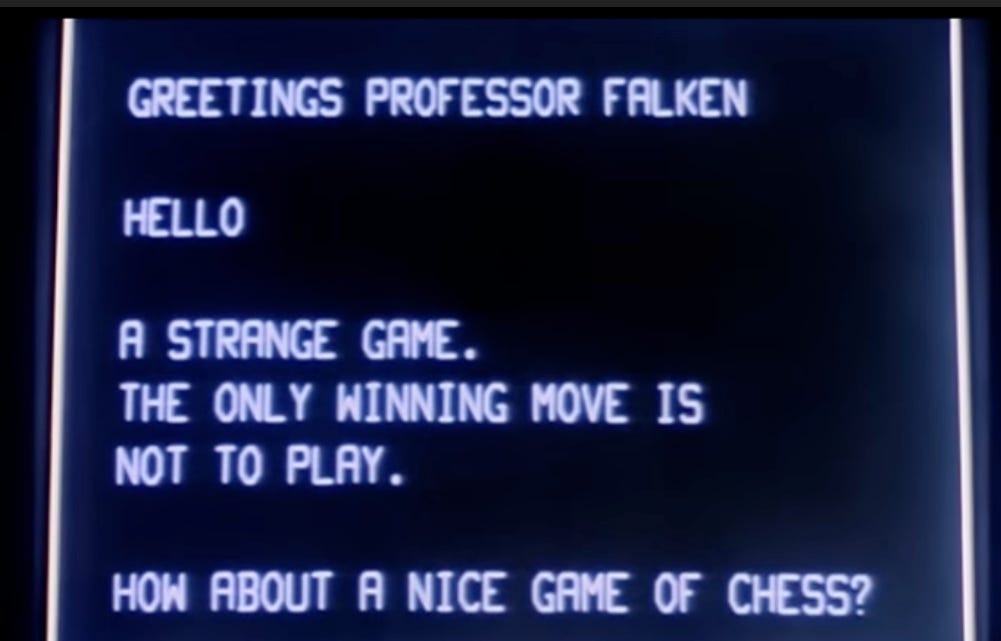
There is a value in not sharing a message. It’s far more subtle, but can yield a number of benefits.
By making room for others to show their cards which might give you an opportunity to learn from or out maneuver them to strengthen your position. This is critical when there are people pursuing competing desired outcomes.
It may be prudent and beneficial to wait for critical information or an event to occur. You cannot wait forever, decisions have to be made and messages shared with the world. But a little delay can provide you a crucial advantage.
Sharing your message runs a risk of harming achieving your desired outcome and/or your reputation. Once information is shared, it cannot be undone.
Strategic Silence
One of the virtues of the philosophy of stoicism is self-control (also referred to as temperance). Can you separate your emotions and desires to objectively evaluate if you should communicate a message?
In today’s environment of continuous communication, results, and decisions (often the wrong ones) it can be difficult to not participate, but that might be exactly the right decision. Are you self-aware of the impacts from sharing a message? How they relate to you? How they relate to your desired outcome?
Inaction, silence, and omission - these are actions driven by a decision. To many people it feels like doing nothing. If it helps, think of them as decision-driven non-actions. Which may well be the best thing to do. This can feel confusing - that you can make a decision to do nothing. It is a valid strategy which takes some getting used to how you probably communicate with people. Consider it strategic silence.
Whether you decide to engage in a communication activity or not comes down to one primary decision. Set aside your need to heard. Put your ego to one side. Ask yourself this one question.
Will engaging in this communication activity harm achieving my desired outcome?
If your answer is no, verify it will help achieve your desired outcome and that it is worthy of the effort. If so, then carry on with your work. If it’s yes (or a maybe) at least take a quick pause. What other options do you have or can create in lieu of this communication activity? Each time ask this question.
The tough part of this is carrying through on your decision. There can be a lot of different factors trying to pressure you into sending what you choose to be the wrong message at the wrong time. There could a time when you have to do this.
But this is not every time. Or it shouldn’t be. If it is, that’s probably a deeper problem. One of the best ways to practice deciding not to do something is practice not doing it.
Practice
Get a friend or colleague and charge them with trying to get you to say you will share a message you think will harm your desired outcome. Ask them at random times to ask you these questions about the message you do not want to share.
When can you share (fill in the blank with communication activity)?
(Fill in the blank with name) is really looking forward to that (bad communication activity name) going out next week.
How much more time until (bad communication activity name) is done?
Why are you opposed to (bad communication activity name)?
This will help to keep you on your toes and become comfortable with saying no with a reason.
Playing the Long Game
Success and contribution is not always about saying something first or doing something for the sake of doing something. Is sharing that message (or not sharing it) the right thing at the right time? Sometimes the answer is not for tomorrow. This kind of decision may not pay off for your desired outcome until some time in the future.